Technology-based lifting
- Indication
- Laxity in the lower third and deep nasolabial folds.
- What can happen
- Mild, temporary redness and sensitivity. Results are individual.
Contour and firmness
The Fotona laser to lift the skin of the face in a minimally invasive way, with no incisions and no downtime.
Dr. Caíque Dias · USP-trained dermatologist · CRM-SP 218613 · RQE 137814
Quick answer
A technology-based lift treats facial skin laxity without incisions, using the Fotona laser. It is an adaptation of Fotona's 4D protocol in which I apply somewhat stronger energy to create skin retraction and a lifting effect, also with collagen stimulation in mind. The procedure has no downtime: most people return to their routine the same day. The number of sessions is defined at the evaluation, and results vary from person to person.
Lifting the skin in a minimally invasive way is the central goal of a technology-based lift. The feeling that your face is melting usually comes from skin laxity and loss of skin support, and today this process can be treated without a scalpel, while preserving the natural look of the face. It is a repositioning of the face with a laser, not with incisions.
The technology-based lift I perform is an adaptation of the 4D protocol of Fotona, a laser platform for rejuvenation. In it, I apply somewhat stronger energy to create skin retraction and a lifting effect to treat laxity, also with collagen stimulation in mind. It is an interesting option for people who want to treat or prevent laxity and avoid surgery in the future. And there is no downtime: most people return to their routine the same day.
At the consultation, I assess the degree of laxity and the quality of your skin, and I define the number of sessions and the interval between them. When the case calls for it, other treatments, such as the soft lift threads or collagen biostimulators, can complement the plan, and this is also decided at the evaluation. The goal is to age quietly, with a firmer face that is still yours.
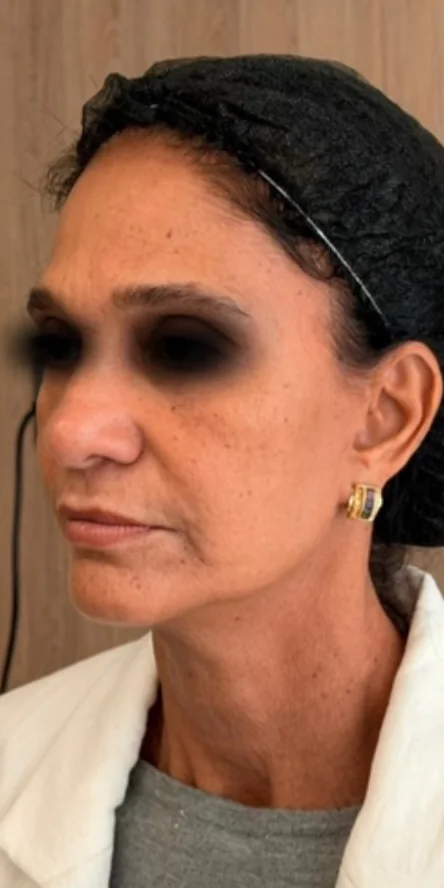
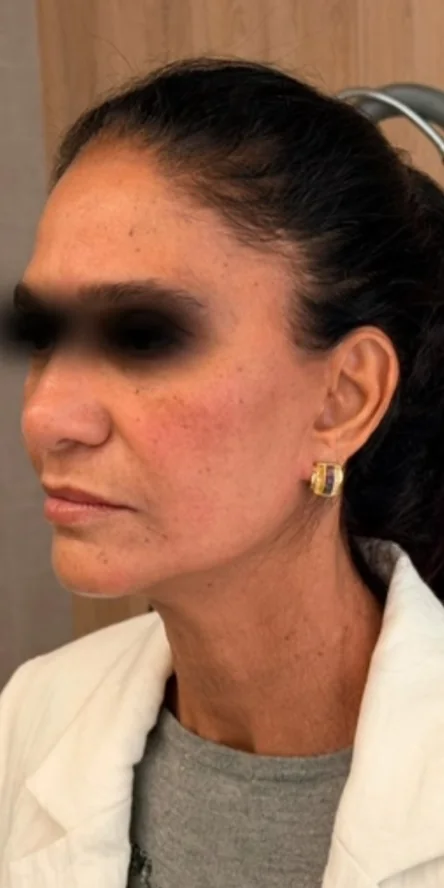
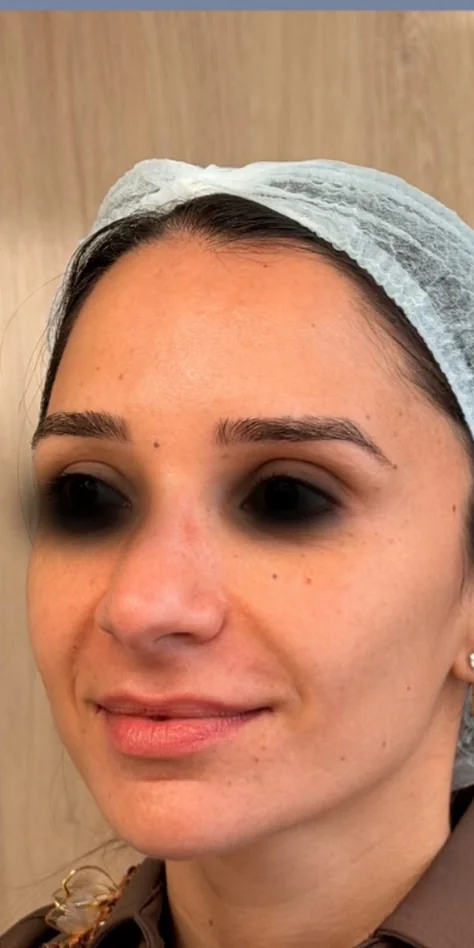
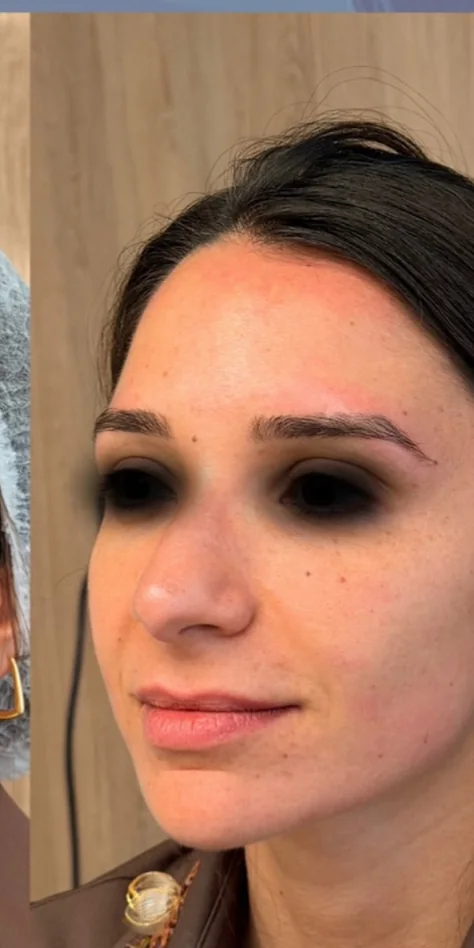
Cases published for educational purposes, in accordance with Brazilian Federal Council of Medicine (CFM) Resolution 2,336/2023. Results vary and depend on individual assessment.
After the session, there may be mild, temporary redness and tenderness of the skin. As with any laser treatment, sun protection is part of the care, and the technology requires proper protocols and training to be used safely. Results vary from person to person. For more advanced laxity, with a lot of excess skin, surgery may be the most appropriate option, and this is discussed openly at the consultation.
It is the treatment of facial skin laxity without incisions, using the Fotona laser. I use an adaptation of Fotona's 4D protocol, with somewhat stronger energy, to create skin retraction and a lifting effect in a minimally invasive way, also with collagen stimulation in mind.
No. The technology-based lift with the Fotona laser has no downtime, and most people return to their routine the same day, sometimes with mild, temporary redness. Other technologies, such as the CO2 laser, have their own indications and a recovery of about 7 days, and they are not part of the technology-based lift.
The protocol creates skin retraction with a lifting effect and is also designed with collagen stimulation in mind, which happens gradually. How much improvement appears, and when, varies from person to person, and the number of sessions and the interval between them are defined at the evaluation.
Not in every case. It is indicated for mild to moderate laxity and for people who want to prevent laxity without incisions. When there is a lot of excess skin, the laser has a limited effect and surgery may be the most appropriate option. This is discussed openly at the consultation.
Other treatments
Tell me what bothers you, and together we'll decide what's worth treating.
Book on WhatsApp